

Study with
PBS Space Time
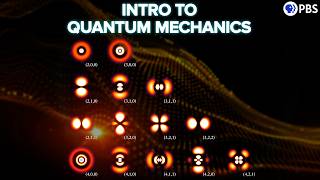
Space Time explores astrophysics and cosmology with astrophysicist Matthew O'Dowd as host. O'Dowd studies very distant objects ( quasars, supermassive black holes, evolving galaxies ) using space telescopes; he completed his PhD at NASA's Space Telescope Science Institute, later worked at the University of Melbourne and at Columbia, and is a professor at the City University of New York's Lehman College and an associate at the American Museum of Natural History's Hayden Planetarium. Each episode takes an open problem in current physics and develops it as far as popular science can go without falsifying the mathematics. Recent subjects give the measure of the channel: black holes that may not originate from stars at all, the possibility that the event horizon precedes the black hole rather than following it, singularities that might end in a frozen big bang, galaxies apparently older than the universe, the state of matter in the Earth's core, accelerating expansion and the tensions between its measurements, the search for the particle associated with gravity, the invisible matter that makes up most of reality, and a particle that seemed to explain everything and turned out not to exist. What a newcomer finds is a demanding, steady format: an exposition delivered to camera, supported by graphics that do real work rather than decorate, with equations present when they are needed. O'Dowd does not avoid difficulty; he organizes it. He carefully separates the established from the conjectural, points out which observation could overturn what he has just explained, and revisits earlier results when the evidence shifts. This is science communication aimed at anyone willing to think for twenty uninterrupted minutes.
Keep studying in the app
Download Videolibros to pick up where you left off, save your progress and listen screen-free.